
Introduction
A decade ago, the idea of talking to a computer felt like science fiction. Today, it’s part of our daily lives. From asking Alexa about the weather to telling Siri to set a reminder, voice assistants have transformed the way we interact with technology.
But this is just the beginning. As artificial intelligence (AI) evolves, voice assistants are becoming smarter, more personalized, and more deeply woven into our homes, workplaces, and cars.
In this article, we’ll explore the rise of voice assistants, how they’re changing our world, and what the future holds.
🎤 A Brief History of Voice Assistants
Voice technology has come a long way:
✅ 1960s: IBM introduced Shoebox, a primitive machine that recognized 16 spoken words.
✅ 2011: Apple launched Siri, the first mainstream voice assistant on a smartphone.
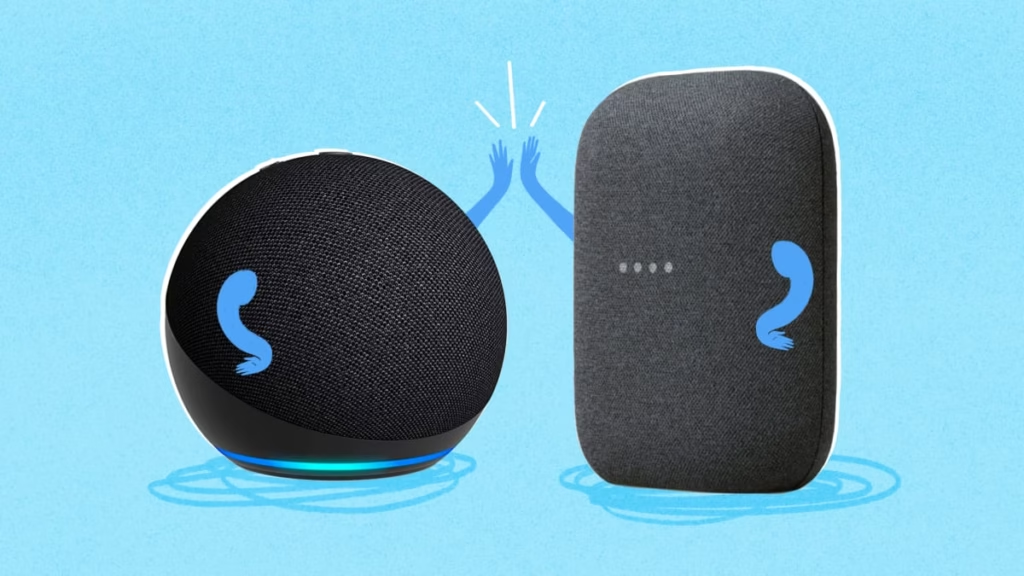
✅ 2014: Amazon debuted Alexa with the Echo speaker, pioneering the smart speaker market.
✅ 2016: Google Assistant arrived, combining search power with natural language understanding.
✅ 2018+: Samsung (Bixby), Microsoft (Cortana), and other companies joined the race.
Today: Voice assistants are built into smartphones, cars, appliances, and even wearables.
🌟 Why Voice Assistants Are So Popular
1. Convenience:
Voice assistants let you multitask—hands-free. You can cook dinner while dictating a text or adjusting your thermostat.
2. Accessibility:
Voice commands empower people with disabilities to control devices and access information more easily.
3. Personalization:
AI-powered assistants learn your preferences over time, offering recommendations and reminders tailored to your needs.
4. Smart Home Integration:
Voice assistants can control lights, locks, security cameras, and appliances—all with a simple command.
📈 The Impact on Daily Life
Voice assistants have reshaped how we:
✅ Shop:
You can reorder household essentials, track packages, and discover new products with a voice prompt.
✅ Work:
Voice-to-text dictation, virtual meeting scheduling, and quick information retrieval help professionals save time.
✅ Stay Informed:
From news updates to weather forecasts, voice assistants are becoming our personal news anchors.
✅ Entertain:
Voice commands can play music, audiobooks, podcasts, and even games.
🔮 The Future of Voice Assistants
So, where are we headed? Here’s what experts predict:
1️⃣ Smarter, More Natural Conversations
AI is improving rapidly, allowing assistants to understand context, emotion, and nuance.
Imagine having a conversation that feels as fluid and natural as speaking with a human.
2️⃣ Deeper Personalization
Future voice assistants will know your routines so well they’ll anticipate your needs:
✅ Suggesting when to leave for appointments
✅ Recommending meals based on your diet
✅ Managing your daily schedule proactively
3️⃣ Expansion Beyond the Home
Voice technology is moving into:
🚗 Cars: In-vehicle assistants for navigation, entertainment, and hands-free calls.
🏢 Workplaces: Voice-enabled tools for productivity and collaboration.
🏥 Healthcare: Assisting patients with medication reminders and health tracking.
4️⃣ Enhanced Privacy and Security
As assistants handle more sensitive data, companies are investing in:
✅ Local processing to avoid storing recordings in the cloud
✅ Improved voice recognition to prevent unauthorized access
✅ Transparent privacy controls for users
5️⃣ Multilingual and Cross-Cultural Capabilities
Voice assistants will soon:
🌍 Understand multiple languages in the same conversation
🌏 Recognize regional dialects and accents more accurately
🌍 Offer culturally relevant responses
⚖️ Challenges Ahead
While the future is promising, there are hurdles to overcome:
- Privacy concerns about data collection
- Bias in AI training data, affecting voice recognition accuracy
- Security risks, such as unauthorized access or “voice spoofing”
- User trust, which companies must earn and maintain
✨ Conclusion
Voice assistants have come a long way in a short time, evolving from novelty gadgets to indispensable tools. As technology advances, they’ll become even more intuitive, secure, and integrated into our daily routines.
One thing is clear: The voice revolution is here to stay—and it’s only getting louder.