
Introduction
With the rise of DIY investing, online brokerage platforms have become more accessible, user-friendly, and affordable than ever before. Whether you’re a seasoned trader or just starting your investing journey, choosing the right platform can significantly impact your experience and success. In this review, we compare some of the most popular online brokerage platforms, highlighting their strengths, weaknesses, and key features to help you make an informed choice.
1. What to Look For in a Brokerage Platform
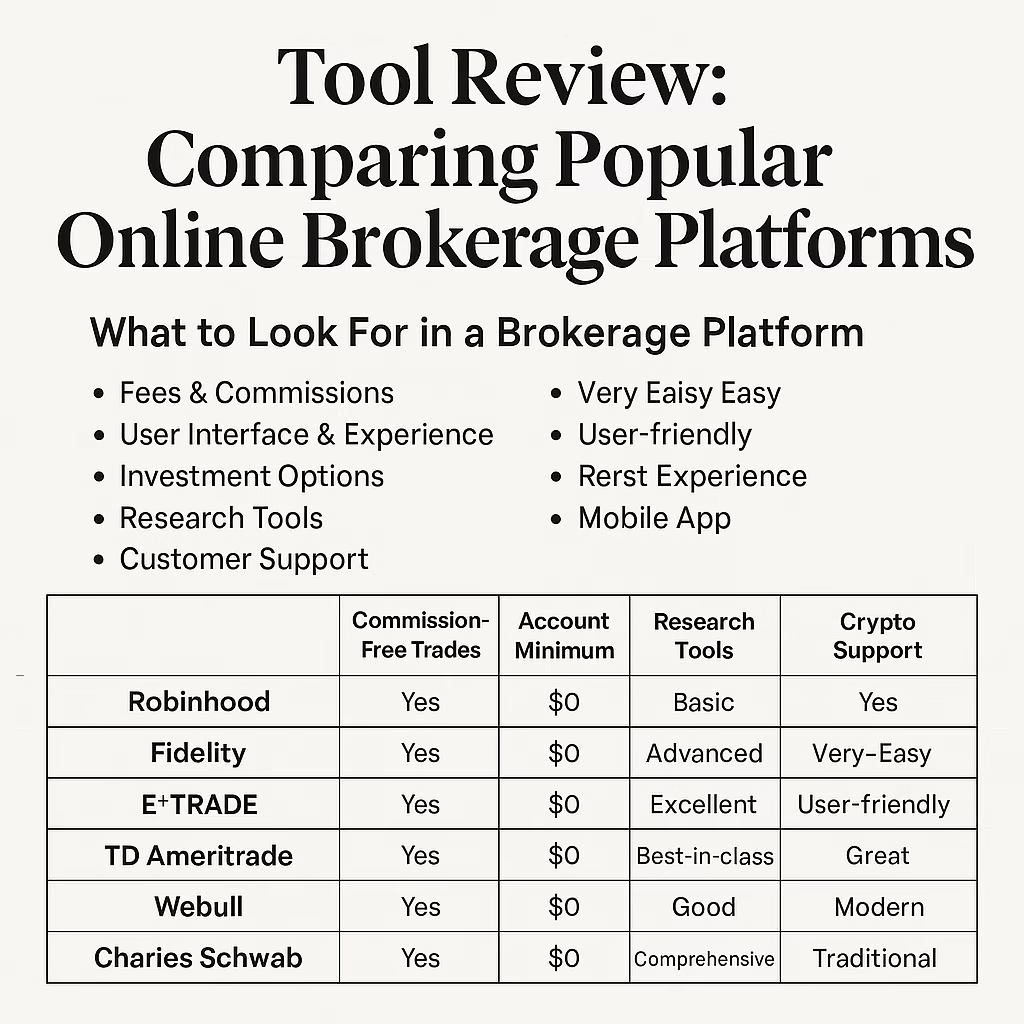
Before diving into the platforms, here are a few criteria to consider:
- Fees & Commissions: Are trades free or do they come with charges?
- User Interface & Experience: Is the platform easy to use?
- Investment Options: Stocks, ETFs, crypto, mutual funds, etc.
- Research Tools: Access to real-time data, charts, analysis, and news.
- Customer Support: Responsive and accessible service.
- Mobile App: Quality and functionality on smartphones/tablets.
2. Platform Comparison Overview
| Platform | Commission-Free Trades | Account Minimum | Research Tools | User Experience | Crypto Support |
|---|---|---|---|---|---|
| Robinhood | Yes | $0 | Basic | Very easy | Yes |
| Fidelity | Yes | $0 | Advanced | User-friendly | No |
| E*TRADE | Yes | $0 | Excellent | Great | No |
| TD Ameritrade | Yes | $0 | Best-in-class | Robust | No |
| Webull | Yes | $0 | Good | Modern | Yes |
| Charles Schwab | Yes | $0 | Comprehensive | Traditional | No |
3. Platform Highlights
🔹 Robinhood
- Best for: Beginners who want simplicity and commission-free trades.
- Pros: Intuitive app, fast account setup, no minimums.
- Cons: Limited research tools, recent controversies over trading halts.
🔹 Fidelity
- Best for: Long-term investors and retirement planning.
- Pros: Excellent customer service, deep research resources.
- Cons: Interface slightly more complex for beginners.
🔹 E*TRADE
- Best for: Active traders looking for strong tools.
- Pros: Powerful charting tools, educational content.
- Cons: Slightly outdated UI on some features.
🔹 TD Ameritrade
- Best for: Advanced investors and traders.
- Pros: Thinkorswim platform is a standout for charting and analysis.
- Cons: Learning curve can be steep for new users.
🔹 Webull
- Best for: Tech-savvy investors interested in both stocks and crypto.
- Pros: Sleek app, extended trading hours, crypto access.
- Cons: Limited educational content, no mutual funds.
🔹 Charles Schwab
- Best for: All-around investors looking for a trusted name.
- Pros: Broad investment options, excellent customer support.
- Cons: Interface could feel dated for younger investors.
4. Choosing the Right Platform for You
Consider your:
- Experience level: Beginners may prefer ease-of-use, while experienced traders may value analytics.
- Investment goals: Long-term retirement planning vs. day trading vs. crypto interest.
- Tools & resources: Do you need research reports, retirement calculators, or mobile alerts?
Example Matchups:
- Beginner? ➤ Try Robinhood or Fidelity.
- Research-heavy investor? ➤ Go with TD Ameritrade or E*TRADE.
- Interested in crypto? ➤ Webull or Robinhood may suit you best.
Conclusion
There’s no one-size-fits-all when it comes to choosing an online brokerage platform. The best choice depends on your goals, investing style, and the features you value most. By understanding the strengths of each platform, you can find one that supports your financial journey and helps you build a smarter portfolio.