
Investing in ESG (Environmental, Social, Governance) Funds: A Smarter, More Ethical Approach
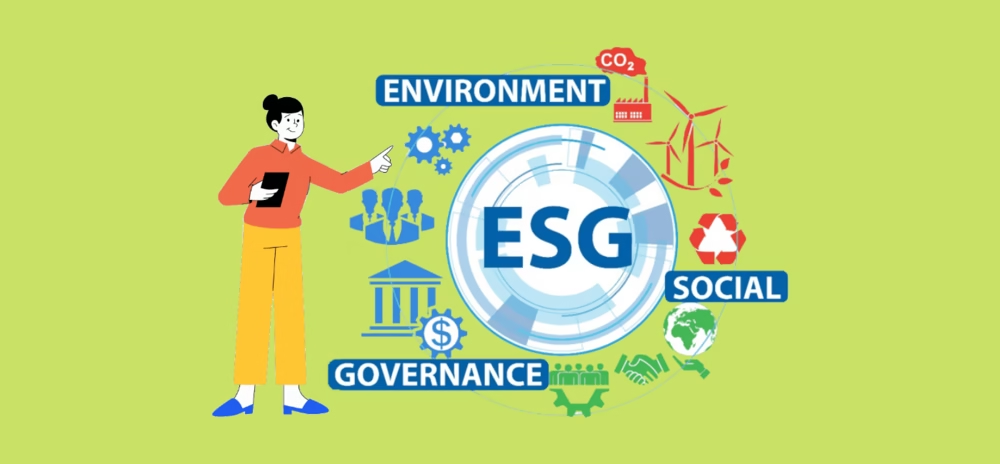
As investors become increasingly conscious of the impact their money makes on the world, ESG investing is gaining serious momentum. ESG stands for Environmental, Social, and Governance—three core pillars used to evaluate companies based on their ethical and sustainable practices. But ESG isn’t just about doing good—it’s also about long-term performance and risk management.
What Are ESG Funds?
ESG funds are mutual funds, exchange-traded funds (ETFs), or other investment vehicles that focus on companies meeting specific environmental, social, and governance standards. Instead of only looking at financial metrics, ESG funds also evaluate how a company:
- Protects the environment (carbon footprint, energy use, waste management)
- Supports society (employee treatment, diversity, community engagement)
- Maintains ethical governance (executive pay, shareholder rights, transparency)
Why Should You Invest in ESG?
1. Align Your Money with Your Values
If you care about climate change, social justice, or ethical business practices, ESG investing lets you support companies that share those values.
2. Lower Risk, Long-Term Stability
Companies with strong ESG profiles often face fewer lawsuits, reputational risks, or regulatory hurdles. That means greater long-term resilience for your portfolio.
3. Competitive Returns
Contrary to the myth that ethical investing sacrifices returns, many ESG funds perform on par with—or even outperform—traditional funds, especially during market volatility.
4. Increasing Global Trend
Governments, institutions, and millennials alike are moving toward sustainable investing. This global shift is expected to drive demand and growth in ESG-oriented companies.
How to Start Investing in ESG Funds
- Do Your Research: Not all ESG funds are created equal. Look into the fund’s criteria and top holdings.
- Use ESG Ratings: Tools like MSCI, Morningstar, and Sustainalytics offer ESG scores to help you compare.
- Diversify: Include a mix of ESG funds across sectors and geographies.
- Talk to a Financial Advisor: For personalized strategies that fit your financial goals and ethical beliefs.
Final Thoughts
ESG investing isn’t just a passing trend—it’s the future of smart, responsible investing. As more investors seek meaning beyond profits, ESG funds offer a unique opportunity to grow wealth while promoting a more sustainable and equitable world.