
Introduction
Choosing a smartphone is no longer just about screen size, camera specs, or price. It’s about stepping into an entire digital ecosystem—an interconnected suite of devices, apps, and services designed to work seamlessly together.
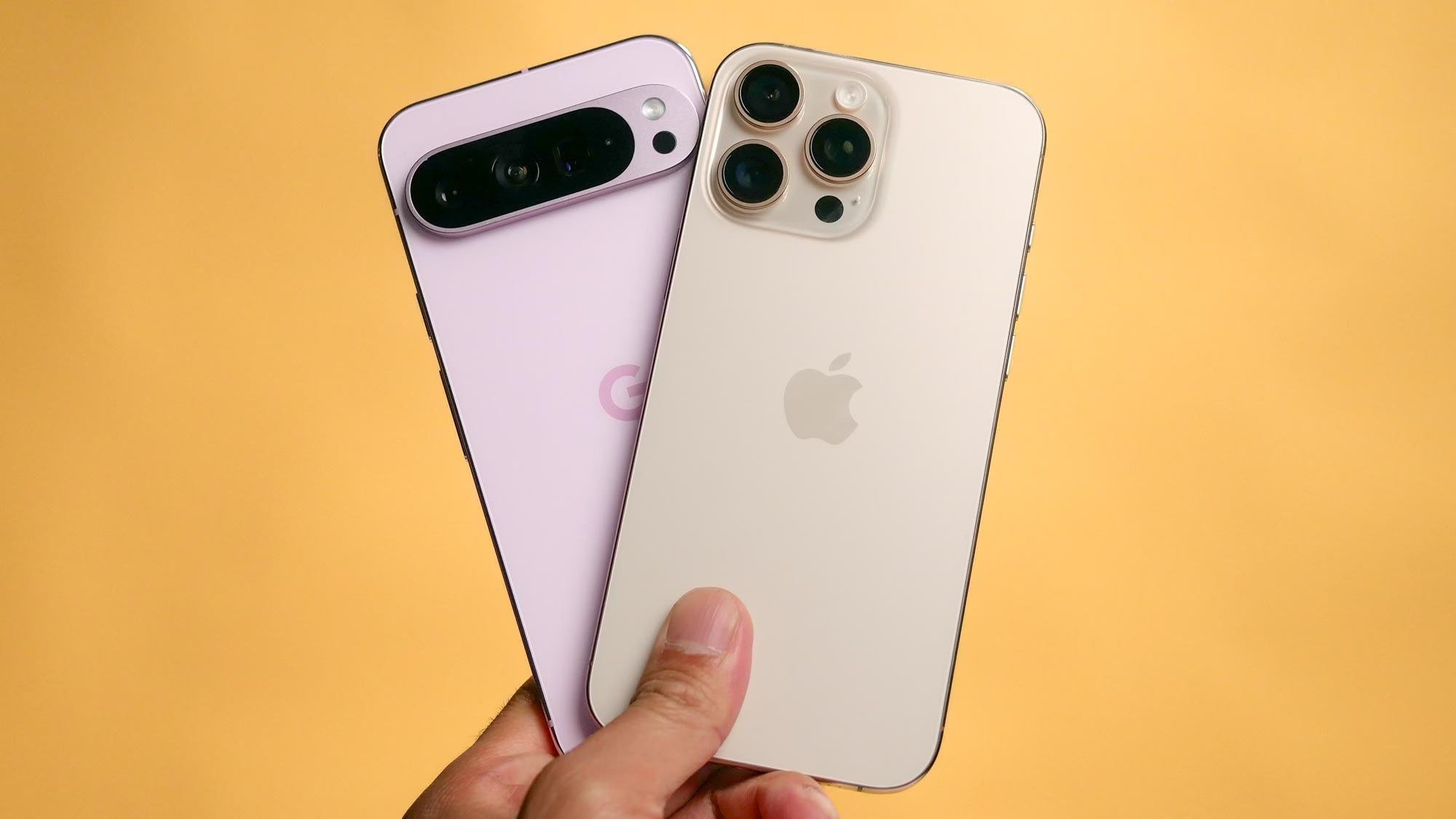
Whether you lean toward the sleek simplicity of Apple’s iPhone or the customizable world of Android, understanding the strengths and trade-offs of each platform will help you decide which ecosystem best fits your lifestyle.
Let’s break it down.
🍏 iPhone Ecosystem: The Apple Advantage
Apple’s ecosystem is famous for its tight integration and polished user experience.
Key Strengths:
✅ Seamless Device Integration
iPhone, iPad, Mac, Apple Watch, and Apple TV work together flawlessly. Features like AirDrop, Handoff, and Universal Clipboard make switching between devices effortless.
✅ iMessage and FaceTime
If most of your friends and family use Apple devices, iMessage and FaceTime provide a smooth, secure way to stay connected.
✅ Privacy and Security
Apple emphasizes user privacy, offering robust encryption, App Tracking Transparency, and regular security updates.
✅ Consistent Software Updates
iPhones receive iOS updates for 5–6 years after release—far longer than most Android devices.
✅ Ecosystem Extras
Apple’s services—iCloud, Apple Music, Apple Pay, Apple Arcade, and Apple Fitness+—are designed to sync perfectly across devices.
Potential Drawbacks:
❌ Less Customization
iOS is more locked down, offering fewer options to tweak the interface or default apps.
❌ Higher Cost
Apple devices and accessories tend to carry a premium price.
❌ Limited Hardware Variety
If you want more form factor choices (foldables, stylus-first phones), Apple’s lineup is narrower.
🤖 Android Ecosystem: Flexibility and Choice
Android is all about freedom and customization. With devices from brands like Samsung, Google, OnePlus, and Motorola, there’s something for every budget and preference.
Key Strengths:
✅ Device Variety
From budget-friendly models to foldable flagships, Android offers unmatched hardware diversity.
✅ Customization
Change your launcher, widgets, default apps, and even the entire look and feel of your phone.
✅ Google Integration
Android phones connect deeply with Google services like Gmail, Maps, Drive, and Assistant.
✅ Hardware Innovations
Android often pioneers new hardware—like in-screen fingerprint sensors, high-refresh displays, and advanced multitasking.
✅ Expandable Storage & USB-C
Many Android phones offer microSD expansion and universal USB-C connectivity.
Potential Drawbacks:
❌ Inconsistent Software Updates
While Google’s Pixel devices get quick updates, many other brands lag behind.
❌ Fragmented Experience
Different manufacturers add their own interfaces and apps, leading to varied experiences across devices.
❌ Privacy Considerations
While Android has improved privacy controls, data sharing with Google and app tracking remain concerns for some users.
🔄 Head-to-Head Comparison
| Feature | iPhone | Android |
|---|---|---|
| Device Range | Limited models, premium focus | Wide range from budget to premium |
| Software Updates | 5–6 years of consistent updates | Varies by manufacturer |
| Customization | Limited | Extensive |
| Integration with Devices | Excellent (Mac, iPad, Watch) | Good (Chromebook, Wear OS) |
| App Ecosystem | Quality, curated App Store | Broader variety, sometimes less vetted |
| Privacy & Security | Strong emphasis | Improving, varies by brand |
| Value for Money | Often expensive | Many affordable options |
💡 How to Choose the Right Ecosystem for You
Choose iPhone If You:
✔️ Value simplicity and reliability
✔️ Already own other Apple products
✔️ Want the longest software support
✔️ Prioritize privacy and security
Choose Android If You:
✔️ Love customizing your phone
✔️ Want more hardware choices and price points
✔️ Prefer deeper Google integration
✔️ Want options like expandable storage and unique features
✨ Conclusion
There’s no one-size-fits-all answer. Both ecosystems have matured into powerful platforms with loyal followings.
The best choice? The one that fits your workflow, budget, and personal preferences.
Take a moment to think about which strengths matter most to you—then confidently pick the ecosystem that feels right.